In search of the best AI website builder? An AI website builder is software that uses machine learning to help you get more done — it turns a rough idea into a polished result in seconds. When choosing one, weigh output quality, pricing, export formats, and how well it fits the tools you already use. Whether you are a beginner or a pro, the right AI website builder slots into your workflow and pays for itself fast. Below we compare features, pricing, and real output so you can choose with confidence.
Commonsense knowledge (artificial intelligence)
In artificial intelligence research, commonsense knowledge consists of facts about the everyday world, such as "Lemons are sour" or "Cows say moo", that all humans are expected to know. It is currently an unsolved problem in artificial general intelligence. The first AI program to address common sense knowledge was Advice Taker in 1959 by John McCarthy. Commonsense knowledge can underpin a commonsense reasoning process, to attempt inferences such as "You might bake a cake because you want people to eat the cake." A natural language processing process can be attached to the commonsense knowledge base to allow the knowledge base to attempt to answer questions about the world. Common sense knowledge also helps to solve problems in the face of incomplete information. Using widely held beliefs about everyday objects, or common sense knowledge, AI systems make common sense assumptions or default assumptions about the unknown similar to the way people do. In an AI system or in English, this is expressed as "Normally P holds", "Usually P" or "Typically P so Assume P". For example, if we know the fact "Tweety is a bird", because we know the commonly held belief about birds, "typically birds fly," without knowing anything else about Tweety, we may reasonably assume the fact that "Tweety can fly." As more knowledge of the world is discovered or learned over time, the AI system can revise its assumptions about Tweety using a truth maintenance process. If we later learn that "Tweety is a penguin" then truth maintenance revises this assumption because we also know "penguins do not fly". == Commonsense reasoning == Commonsense reasoning simulates the human ability to use commonsense knowledge to make presumptions about the type and essence of ordinary situations they encounter every day, and to change their "minds" should new information come to light. This includes time, missing or incomplete information and cause and effect. The ability to explain cause and effect is an important aspect of explainable AI. Truth maintenance algorithms automatically provide an explanation facility because they create elaborate records of presumptions. Compared with humans, all existing computer programs that attempt human-level AI perform extremely poorly on modern "commonsense reasoning" benchmark tests such as the Winograd Schema Challenge. The problem of attaining human-level competency at "commonsense knowledge" tasks is considered to probably be "AI complete" (that is, solving it would require the ability to synthesize a fully human-level intelligence), although some oppose this notion and believe compassionate intelligence is also required for human-level AI. Common sense reasoning has been applied successfully in more limited domains such as natural language processing and automated diagnosis or analysis. == Commonsense knowledge base construction == Compiling comprehensive knowledge bases of commonsense assertions (CSKBs) is a long-standing challenge in AI research. From early expert-driven efforts like CYC and WordNet, significant advances were achieved via the crowdsourced OpenMind Commonsense project, which led to the crowdsourced ConceptNet KB. Several approaches have attempted to automate CSKB construction, most notably, via text mining (WebChild, Quasimodo, TransOMCS, Ascent), as well as harvesting these directly from pre-trained language models (AutoTOMIC). These resources are significantly larger than ConceptNet, though the automated construction mostly makes them of moderately lower quality. Challenges also remain on the representation of commonsense knowledge: Most CSKB projects follow a triple data model, which is not necessarily best suited for breaking more complex natural language assertions. A notable exception here is GenericsKB, which applies no further normalization to sentences, but retains them in full. == Applications == Around 2013, MIT researchers developed BullySpace, an extension of the commonsense knowledgebase ConceptNet, to catch taunting social media comments. BullySpace included over 200 semantic assertions based around stereotypes, to help the system infer that comments like "Put on a wig and lipstick and be who you really are" are more likely to be an insult if directed at a boy than a girl. ConceptNet has also been used by chatbots and by computers that compose original fiction. At Lawrence Livermore National Laboratory, common sense knowledge was used in an intelligent software agent to detect violations of a comprehensive nuclear test ban treaty. == Data == As an example, as of 2012 ConceptNet includes these 21 language-independent relations: IsA (An "RV" is a "vehicle" | X is an instance of a Y) UsedFor (a "cake tin" is used for "making cakes" | X is used for the purpose Y) HasA (A "rabbit" has a "tail" | X possesses Y element or feature) CapableOf (a "cook" is capable of "making baked goods" | X is capable of doing Y) Desires (a "child" desires "the aroma of baking" | X has a desire for Y) CreatedBy ("cake" is created by a "baker" | X is created by Y) PartOf (a "knife" is be part of a "knife set" | X is a part of Y) Causes ("Heat" causes "cooking"| X is what causes Y) LocatedNear (the "oven" is located near the "refrigerator" | X is located near Y) AtLocation (Somewhere a "Cook" can be at a "restaurant" | X is at the location of Y) DefinedAs (a "Cupcake" is defined as a "cake" that also has the qualities of being "small", "baked within a wrapper", and "containing only one area of frosting or icing" | X is defined as Y that also has the properties A, B & C) SymbolOf (a "heart" is a symbol of "affection" | X is a symbolic representation of Y) ReceivesAction ("cake" can receive the action of being "eaten" | X is capable of receiving action Y) HasPrerequisite ("baking" has the prerequisite of obtaining the "ingredients" | X cannot do Y unless A does B) MotivatedByGoal ("baking" is motivated by the goal of "consumption"/"eating" | X has the motivation of Y goal) CausesDesire ("baking" makesYou want to "follow recipe" | X causes the desire to do Y) MadeOf ("Cake" is made of "flour"/"eggs"/"sugar"/"oil"/etc | X is made of Y) HasFirstSubevent ("baking" has first subevent "make batter" | To do X the first thing that needs to be done is Y) HasSubevent ("eat" has subevent "swallow" | Doing X will lead to Y event following) HasLastSubevent ("sleeping" has last subevent of "waking" | Doing X ends with the event Y) == Commonsense knowledge bases == Cyc Open Mind Common Sense (data source) and ConceptNet (datastore and NLP engine) Evi Graphiq
Object Data Management Group
The Object Data Management Group (ODMG) was conceived in the summer of 1991 at a breakfast with object database vendors that was organized by Rick Cattell of Sun Microsystems. In 1998, the ODMG changed its name from the Object Database Management Group to reflect the expansion of its efforts to include specifications for both object database and object–relational mapping products. The primary goal of the ODMG was to put forward a set of specifications that allowed a developer to write portable applications for object database and object–relational mapping products. In order to do that, the data schema, programming language bindings, and data manipulation and query languages needed to be portable. Between 1993 and 2001, the ODMG published five revisions to its specification. The last revision was ODMG version 3.0, after which the group disbanded. == Major components of the ODMG 3.0 specification == Object Model. This was based on the Object Management Group's Object Model. The OMG core model was designed to be a common denominator for object request brokers, object database systems, object programming languages, etc. The ODMG designed a profile by adding components to the OMG core object model. Object Specification Languages. The ODMG Object Definition Language (ODL) was used to define the object types that conform to the ODMG Object Model. The ODMG Object Interchange Format (OIF) was used to dump and load the current state to or from a file or set of files. Object Query Language (OQL). The ODMG OQL was a declarative (nonprocedural) language for query and updating. It used SQL as a basis, where possible, though OQL supports more powerful object-oriented capabilities. C++ Language Binding. This defined a C++ binding of the ODMG ODL and a C++ Object Manipulation Language (OML). The C++ ODL was expressed as a library that provides classes and functions to implement the concepts defined in the ODMG Object Model. The C++ OML syntax and semantics are those of standard C++ in the context of the standard class library. The C++ binding also provided a mechanism to invoke OQL. Smalltalk Language Binding. This defined the mapping between the ODMG ODL and Smalltalk, which was based on the OMG Smalltalk binding for the OMG Interface Definition Language (IDL). The Smalltalk binding also provided a mechanism to invoke OQL. Java Language Binding. This defined the binding between the ODMG ODL and the Java programming language as defined by the Java 2 Platform. The Java binding also provided a mechanism to invoke OQL. == Status == ODMG 3.0 was published in book form in 2000.[1] By 2001, most of the major object database and object-relational mapping vendors claimed conformance to the ODMG Java Language Binding. Compliance to the other components of the specification was mixed.[2] In 2001, the ODMG Java Language Binding was submitted to the Java Community Process as a basis for the Java Data Objects specification. The ODMG member companies then decided to concentrate their efforts on the Java Data Objects specification. As a result, the ODMG disbanded in 2001. In 2004, the Object Management Group (OMG) was granted the right to revise the ODMG 3.0 specification as an OMG specification by the copyright holder, Morgan Kaufmann Publishers. In February 2006, the OMG announced the formation of the Object Database Technology Working Group (ODBT WG) and plans to work on the 4th generation of an object database standard. == ODMG Compliant DBMS == Orient ODBMS: http://www.OrienTechnologies.com Objectivity/DB C++, Java and Smalltalk interfaces.
Vatican News App
The Vatican News App is an official mobile application software issued by the Vatican's Dicastery for Communication. Formerly titled The Pope App, the app was launched on January 23, 2013, under the auspices of the Pontifical Council for Social Communications, a now-defunct dicastery that was merged into the Secretariat (now Dicastery) for Communication in March 2016. Initially, The Pope App was available only on iOS devices, but became available for Android phones at the end of February 2013. The app is available for download on iOS and Android in five languages: English, French, Italian, Portuguese and Spanish. It was originally promoted as an application with focus on the figure of the Pope which made it possible to follow the Pope's events while they are taking place. Alerts notified the followers by informing and offering access to "official papal-related content in a variety of formats". The app also enabled its users to see areas of the Vatican through webcams allocated throughout St. Peter's Square in Rome that broadcast images. In early 2018, The Pope App was relaunched as the Vatican News App, accompanied by a redesign that eliminated many of the previous version's features, reducing the app to a more conventional news service, with increased emphasis on news from the Vatican and the worldwide Catholic Church and less focus on the day-to-day activities of the Pope.
Universal IR Evaluation
In computer science, Universal IR Evaluation (information retrieval evaluation) aims to develop measures of database retrieval performance that shall be comparable across all information retrieval tasks. == Measures of "relevance" == IR (information retrieval) evaluation begins whenever a user submits a query (search term) to a database. If the user is able to determine the relevance of each document in the database (relevant or not relevant), then for each query, the complete set of documents is naturally divided into four distinct (mutually exclusive) subsets: relevant documents that are retrieved, not relevant documents that are retrieved, relevant documents that are not retrieved, and not relevant documents that are not retrieved. These four subsets (of documents) are denoted by the letters a, b, c, d respectively and are called Swets variables, named after their inventor. In addition to the Swets definitions, four relevance metrics have also been defined: Recall refers to the fraction of relevant documents that are retrieved (a/(a+b)), and Precision refers to the fraction of retrieved documents that are relevant (a/(a+c)). These are the most commonly used and well-known relevance metrics found in the IR evaluation literature. Two less commonly used metrics include the Fallout, i.e., the fraction of not relevant documents that are retrieved (b/(b+d)), and the Miss, which refers to the fraction of relevant documents that are not retrieved (c/(c+d)) during any given search. == Universal IR evaluation techniques == Universal IR evaluation addresses the mathematical possibilities and relationships among the four relevance metrics Precision, Recall, Fallout and Miss, denoted by P, R, F and M, respectively. One aspect of the problem involves finding a mathematical derivation of a complete set of universal IR evaluation points. The complete set of 16 points, each one a quadruple of the form (P, R, F, M), describes all the possible universal IR outcomes. For example, many of us have had the experience of querying a database and not retrieving any documents at all. In this case, the Precision would take on the undetermined form 0/0, the Recall and Fallout would both be zero, and the Miss would be any value greater than zero and less than one (assuming a mix of relevant and not relevant documents were in the database, none of which were retrieved). This universal IR evaluation point would thus be denoted by (0/0, 0, 0, M), which represents only one of the 16 possible universal IR outcomes. The mathematics of universal IR evaluation is a fairly new subject since the relevance metrics P, R, F, M were not analyzed collectively until recently (within the past decade). A lot of the theoretical groundwork has already been formulated, but new insights in this area await discovery.
Non-human
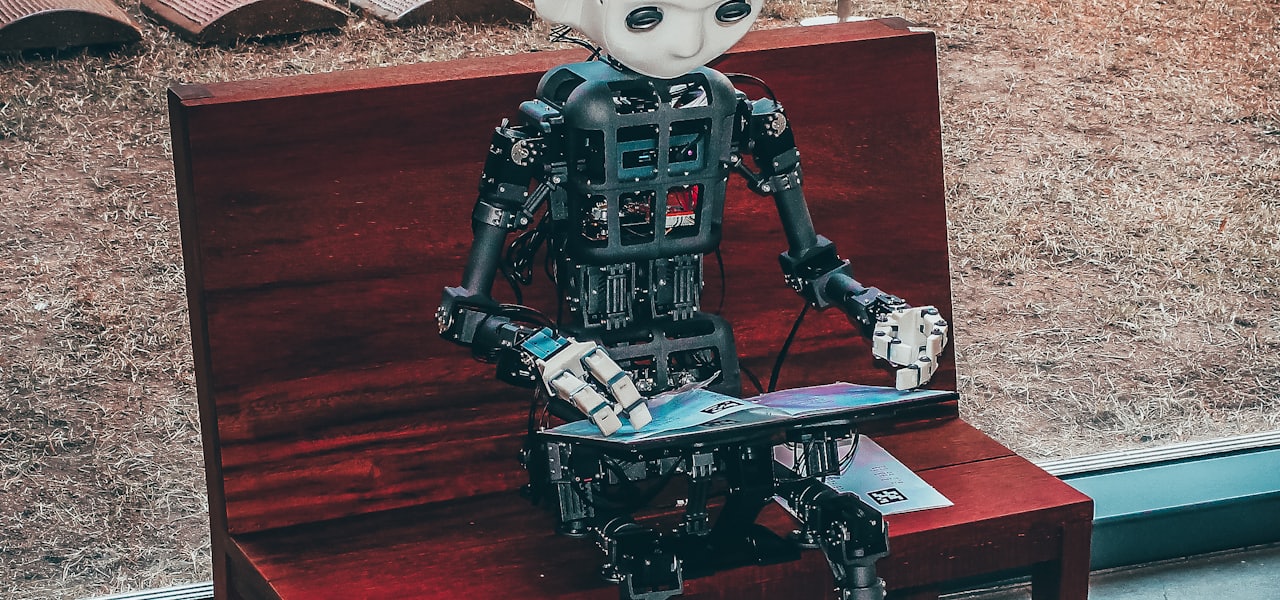
Non-human (also spelled nonhuman) is any entity displaying some, but not enough, human characteristics to be considered a human. The term has been used in a variety of contexts and may refer to objects that have been developed with human intelligence, such as robots or vehicles. == Organisms == === Animal rights and personhood === In the animal rights movement, it is common to distinguish between "human animals" and "non-human animals". Participants in the animal rights movement generally recognize that non-human animals have some similar characteristics to those of human persons. For example, various non-human animals have been shown to register pain, compassion, memory, and some cognitive function. Some animal rights activists argue that the similarities between human and non-human animals justify giving non-human animals rights that human society has afforded to humans, such as the right to self-preservation, and some even wish for all non-human animals or at least those that bear a fully thinking and conscious mind, such as vertebrates and some invertebrates such as cephalopods, to be given a full right of personhood. === The non-human in philosophy === Contemporary philosophers have drawn on the work of Henri Bergson, Gilles Deleuze, Félix Guattari, and Claude Lévi-Strauss (among others) to suggest that the non-human poses epistemological and ontological problems for humanist and post-humanist ethics, and have linked the study of non-humans to materialist and ethological approaches to the study of society and culture. == Software and robots == The term non-human has been used to describe computer programs and robot-like devices that display some human-like characteristics. In both science fiction and in the real world, computer programs and robots have been built to perform tasks that require human-computer interactions in a manner that suggests sentience and compassion. There is increasing interest in the use of robots in nursing homes and to provide elder care. Computer programs have been used for years in schools to provide one-on-one education with children. The Tamagotchi toy required children to provide care, attention, and nourishment to keep it "alive".
Key–value database
A key-value database, or key-value store, is a data storage paradigm designed for storing, retrieving, and managing associative arrays, a data structure more commonly known today as a dictionary. Dictionaries contain a collection of objects, or records, which in turn have many different fields within them. These records are stored and retrieved using a key that uniquely identifies the record, and is used to find the data within the database. Key-value databases differ from the better known relational databases (RDB). RDBs pre-define the data structure in the database as a series of tables containing fields with well-defined data types. Exposing the data types to the database program allows it to apply various optimizations. In contrast, key-value systems treat the value as opaque to the database itself, and typically support only simple operations such as storing, retrieving, updating, and deleting a value by its key. This offers considerable flexibility and makes such systems well suited to low-latency, high-throughput workloads dominated by direct key lookups, but less suitable for applications that require complex queries or explicit relationships among records. A lack of standardization, limited transaction support, and relatively simple query interfaces long restricted many key-value systems to specialized uses, but the rapid move to cloud computing after 2010 helped drive renewed interest in them as part of the broader NoSQL movement. Some graph databases, such as ArangoDB, are also key–value databases internally, adding the concept of relationships (pointers) between records as a first-class data type. == Types and examples == Key–value systems span a wide consistency spectrum, from eventually consistent designs to strongly consistent or serializable ones, and some allow the consistency level to be configured as part of the trade-off against latency and availability. Renewed interest in key–value and other NoSQL systems was driven in part by the demands of big data, distributed, and cloud applications. Their scalability and availability made them attractive for cloud data management, although limited transaction support, low-level query interfaces, and the lack of standardization remained obstacles to wider adoption. Some maintain data in memory (RAM), while others employ solid-state drives or rotating disks. Some key–value systems add additional structure to their keys. For example, Oracle NoSQL Database organizes records using composite keys with "major" and "minor" components, an arrangement that Oracle compares to a directory-path structure in a file system. More generally, however, key–value stores are defined by their use of unique keys associated with opaque values and by their emphasis on simple key-based operations. Unix included dbm (database manager), a minimal database library written by Ken Thompson for managing associative arrays with a single key and hash-based access. Later implementations and related libraries included sdbm, GNU dbm (gdbm), and Berkeley DB. A more recent example is RocksDB, a persistent key–value storage engine developed at Facebook and designed for large-scale applications. Other examples include in-memory systems such as Memcached and Redis, and persistent systems such as Berkeley DB, Riak, and Voldemort.